

Understanding whether honey can freeze like water is a question that often arises in the beekeeping and honey production community. Honey’s response to cold temperatures is unique due to its complex composition. For anyone managing honey storage, knowing how honey behaves in a cold environment will preserve honey’s quality, texture, and shelf life.
This guide will walk you through the science behind honey’s freezing behavior. It will clarify the difference between freezing and crystallization, and offer practical advice on storage and temperature management. We’ll also introduce solutions like the Powerblanket Bee Blanket that help maintain the perfect environment for your honey year-round.
Understanding Honey’s Freezing Behavior
Honey is not just sugar and water; it’s a supersaturated solution with a rich mix of sugars, enzymes, minerals, and trace compounds. This complexity means honey doesn’t freeze the way water does.
The Composition of Honey and Its Impact on Freezing
Honey’s high sugar content, primarily fructose and glucose, lowers its freezing point significantly compared to water’s 0°C (32°F). Typically, honey freezes around –20°C (-4°F). As a reference, most home freezers are set to -18°C (0°F) or below.
This means that under most household or commercial freezer conditions, honey will not freeze solid.
- Honey is a supersaturated sugar solution.
- The high sugar concentration interferes with ice crystal formation.
- Honey’s freezing point is much lower than water’s.
For a detailed scientific breakdown, see The chemistry of honey.
Can Honey Freeze Solid?
While honey can freeze, it rarely becomes a solid block under typical conditions. Instead, it thickens and becomes more viscous. The sugar molecules prevent the formation of large ice crystals, so honey doesn’t behave like frozen water.
In colder environments, honey may undergo honey crystallization, where glucose separates from water and forms tiny sugar crystals. This separation is especially common in raw honey or unfiltered honey, which contains natural particles that act as seeds for crystals.
Key Differences Between Honey Crystallization and Freezing
Understanding the distinction between crystallization and freezing helps you manage your honey better:
| Aspect | Crystallization | Freezing |
| Temperature Range | 10°C to 18°C (50°F to 64°F) | Around -20°C (-4°F) |
| Process | Glucose separates and forms crystals | Water content forms ice crystals |
| Reversibility | Reversible by gentle warming | Thaws back to a liquid state |
| Texture | Grainy, spreadable | Semi-solid, difficult to pour |
| Impact on Quality | No harm to quality or nutrition | No harm if thawed properly |
Both are natural processes and do not degrade your honey’s value.
Why Does Honey Crystallize?
Crystallization occurs because glucose tends to separate from the water in honey, especially when stored at cooler temperatures. Natural particles like pollen and wax in raw honey act as nuclei for crystals to form. Pure honey has been filtered and pasteurized, removing many of the particles, and is less likely to crystallize.
- Crystallization is a natural, harmless process.
- Many consumers prefer crystallized honey for its texture.
- Proper storage can slow crystallization.
If honey crystallizes, you can gently warm it to return it to its liquid form. For detailed instructions, visit How to soften honey.

Best Practices for Protecting Honey Quality and Shelf Life
Proper storage is the foundation of maintaining your honey’s natural qualities and extending its shelf life.
Why Proper Storage Is Essential
Poor honey storage can lead to premature crystallization, fermentation, or flavor degradation. According to Purdue University, honey stored below 41°F (5°C) maintains its original flavor and texture longer when kept in sealed glass jars away from sunlight.
Practical Tips for Storing Honey
- Store honey at room temperature (20–25°C) to keep it smooth and slow crystallization.
- Use a tightly sealed glass jar to prevent moisture absorption, which can cause fermentation.
- Avoid direct sunlight or heat to preserve enzymes and flavor.
- Avoid metal containers, which may affect flavor.
- If crystallization happens, gently warm the honey to restore its liquid state.
Temperature Control Solutions for Beekeepers and Producers
Managing temperature consistently can be challenging, especially in colder climates or large-scale operations. You can heat honey using the Powerblanket Bee Blanket, which offers gentle, uniform heat that mimics the natural warmth of a hive. These functions help prevent unwanted crystallization or freezing during colder months.
By maintaining optimal temperatures, the Bee Blanket ensures your honey stays smooth, flavorful, and preserves its natural qualities.
What Happens If You Freeze Honey?
Freezing honey is safe, but it affects texture and usability.
The Freezing Process
When honey is exposed to temperatures below its freezing point (around -20°C), it becomes semi-solid. Ice crystals form from the water content, but the sugar concentration prevents it from freezing solid like water.
Effects of Freezing on Honey
| Aspect | Description |
| Freezing Point | Around -20°C (-4°F) |
| Texture Changes | Thicker, grainier, may crystallize |
| Taste & Quality | Unchanged if thawed gently |
| Safety | Safe to consume after freezing |
| Storage Advice | Use temperature control to avoid freezing. |
Is Frozen Honey Dangerous?
No. Frozen honey remains safe to eat and retains its natural benefits. The main concern is texture, which can be restored with proper thawing.
How to Thaw Frozen Honey
- Remove containers from cold storage.
- Transfer to a warming room at 35°C to 40°C (95°F to 104°F).
- Allow gradual warming to avoid thermal shock.
- Monitor temperature to prevent overheating, which can degrade enzymes and flavor.
- For large volumes, use warming cabinets or the Powerblanket Bee Blanket for consistent heating.
Proper thawing preserves honey’s quality and market value.
Real-World Example: Zeller & Sons Honey Case Study
Zeller & Sons, a family-run honey producer, faced challenges with crystallization and freezing during winter storage. By integrating the Powerblanket Bee Blanket, they warmed 6,000 pounds of honey and sped up their production workflow.
The Bee Blankets maintained consistent hive and storage temperatures, reducing crystallization and preserving honey quality. Download our honey case study to learn more about their experience and results.
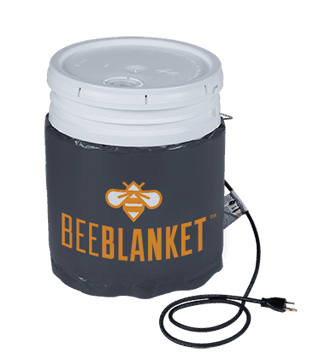
Keep Honey Warm and Flowing | The Powerblanket Bee Blanket helps maintain an ideal temperature so honey stays smooth, pourable, and ready for processing.
Bee Blankets for Buckets & DrumsThe Role of Sugar Molecules and Moisture in Honey’s Stability
Honey’s stability depends on the balance of sugar molecules and moisture. High sugar concentration binds water molecules, reducing free water that can freeze or support microbial growth.
However, if honey absorbs moisture due to improper container sealing, it becomes more prone to fermentation. Beekeepers should store honey in tightly sealed, food-grade containers.
How Does Room Temperature Affect Honey?
Storing honey at room temperature is ideal for maintaining its liquid state and preventing crystallization. Fluctuating or low temperatures accelerate crystallization.
If you live in cooler climates, consider temperature control solutions to maintain consistent warmth and protect your honey’s texture.
FAQs About Honey and Freezing
At what temperature will honey freeze?
Honey freezes at about -20°C (-4°F), much colder than water due to its high sugar content.
Is it safe to eat honey after it’s been frozen?
Yes. Frozen honey is safe to consume. Freezing affects texture but not safety or flavor.
Can honey make you dizzy?
Honey won’t cause dizziness in normal amounts, unless you have sugar-related health issues. Excessive sugar consumption may cause lightheadedness, so moderation is key. As a side note, there is a certain type of honey, called “mad honey” from regions like Turkey and Nepal, that can cause dizziness due to the presence of grayanotoxin.
Your Ideal Honey Storage
Understanding how honey freezes and how temperature impacts its texture and quality is vital for beekeepers and honey producers. Honey’s natural resistance to freezing solid means crystallization and thickening are more common concerns.
By storing honey at room temperature in sealed glass jars and using temperature control solutions like the Powerblanket Bee Blanket, you can ensure your honey maintains its smooth texture and rich flavor year-round.
Download our Bee Blanket guide to learn how to keep your honey at the perfect temperature.
The Powerblanket Bee Blanket will maintain the same temperature as a hive, ensuring your honey is always at the perfect temperature. Explore Bee Blankets.
Frequently Asked Questions
At what temperature will honey freeze?
Honey freezes at about -20°C / -4°F, much colder than water because its high sugar content lowers its freezing point.
Is it safe to eat honey after it’s been frozen?
Yes, frozen honey is safe to eat, and freezing mainly affects its texture rather than its safety or flavor.
What happens if you freeze honey?
When honey freezes, it becomes thicker and more difficult to pour, and it may develop a grainier texture or crystallize depending on storage conditions.
Is honey crystallization the same as freezing?
No, crystallization happens when glucose separates and forms sugar crystals, while freezing happens when cold temperatures cause the honey’s water content to form ice crystals.
How do you thaw frozen honey?
Thaw frozen honey gradually in a warm room or controlled warming environment, avoiding overheating so the honey’s flavor, enzymes, and quality are preserved.
The Powerblanket Bee Blanket will maintain the same temperature as a hive, ensuring your honey is always at the perfect temperature.