

Your industrial operations depend on understanding how water viscosity changes with temperature. Whether you’re managing pumping systems, optimizing heat exchangers, or maintaining fluid transport networks, the viscosity of water directly impacts your system’s efficiency and reliability.
Water viscosity is a practical factor that affects everything from energy consumption to equipment performance. When temperatures shift, so does your water’s flow behavior, and that means your operations need to adapt.
Understanding Water Viscosity in Industrial Applications
Viscosity represents a liquid’s resistance to flow, essentially measuring the internal friction between molecules as they move past each other. Think of it as the thickness or stickiness of a fluid. Though water seems thin compared to honey or oil, its viscosity values still matter significantly in industrial settings.
The symbol for viscosity varies depending on which type you’re measuring. The Symbol for Dynamic viscosity uses the Greek letter μ (mu), while kinematic viscosity uses ν (nu). Understanding both types helps you make better decisions for your specific applications.
Dynamic vs. Kinematic Viscosity
Dynamic viscosity (also called absolute viscosity) measures a fluid’s resistance to shear stress. The dynamic viscosity formula relates the force required to move one layer of fluid past another at a specific velocity. This measurement directly affects how much energy your pumps need to move water through your systems.
Kinematic viscosity takes dynamic viscosity and divides it by the fluid’s density. The kinematic viscosity formula gives you a practical measurement that accounts for how gravity affects fluid flow. For water-based systems, this distinction becomes crucial when you’re calculating flow rates and pressure requirements.
The relationship between dynamic and kinematic viscosity helps you predict how your systems will perform under different conditions. When you’re designing or troubleshooting industrial processes, knowing both values gives you a complete picture of your fluid’s behavior.
Understanding how to calculate viscosity becomes essential when you’re optimizing your operations for maximum efficiency.
When to Use Each Type of Viscosity Measurement
Dynamic viscosity applies when calculating forces and energy:
- Pump sizing: Determines motor torque and power requirements
- Pressure drop calculations: Used directly in the Darcy-Weisbach equation for head loss through pipes and fittings
- Bearing lubrication: Calculates load-carrying capacity in water-lubricated systems
Kinematic viscosity matters for gravity-driven and flow pattern analysis:
- Reynolds number calculations: Determines laminar vs. turbulent flow (Re = VD/ν)
- Heat exchanger design: Required for heat transfer correlations
- Open channel flow: Drainage and gravity-fed processes
For example, sizing a centrifugal pump at 40°C requires dynamic viscosity (0.653 mPa·s) to calculate motor horsepower. Predicting flow patterns in that same system uses kinematic viscosity (0.658 mm²/s) for Reynolds number calculations.
How Temperature Changes Water Viscosity
Temperature dramatically affects water viscosity, and understanding this relationship protects your equipment and maintains operational efficiency. As temperature increases, viscosity decreases, a principle that governs countless industrial processes.
At the molecular level, hydrogen atoms in water molecules create bonds that influence flow characteristics. When you heat water, these molecules gain kinetic energy and move more freely, reducing internal friction. Conversely, cold water molecules move sluggishly, creating higher viscosity and increased resistance to flow.
The Temperature-Viscosity-Flow Relationship
Water viscosity at 20°C (68°F) measures 1.002 mPa·s, a standard reference point for many industrial calculations. This temperature represents typical ambient conditions in many facilities, making it a crucial baseline for your system designs. The National Institute of Standards and Technology (NIST) database offers precise viscosity data for various conditions when you need highly accurate values for critical applications.
As the temperature increases from 20°C, viscosity decreases exponentially rather than linearly. This means small temperature increases at lower temperatures create larger viscosity changes than the same temperature increase at higher temperatures. The scientific principle behind this phenomenon involves molecular kinetic energy: higher temperatures provide molecules with more energy to overcome intermolecular forces, reducing internal friction and allowing easier fluid flow.
This temperature-viscosity relationship directly governs fluid flow behavior in your systems. When viscosity decreases, Reynolds numbers increase, potentially shifting flow from laminar to turbulent regimes. Your pumps experience reduced head requirements, heat exchangers show improved convective heat transfer, and pressure drops across piping decrease significantly. Conversely, when temperatures drop and viscosity increases, your systems face higher energy demands, reduced throughput, and increased mechanical stress on components.
Temperature-Viscosity Relationship Table
| Temperature (°C) | Dynamic Viscosity (mPa·s) | Kinematic Viscosity (mm²/s) | Density of Water in g/cm3 |
| 0 | 1.787 | 1.787 | 0.9998 |
| 10 | 1.307 | 1.307 | 0.9997 |
| 20 | 1.002 | 1.004 | 0.9982 |
| 25 | 0.890 | 0.893 | 0.9970 |
| 40 | 0.653 | 0.658 | 0.9922 |
| 60 | 0.467 | 0.475 | 0.9832 |
| 80 | 0.355 | 0.365 | 0.9718 |
| 100 | 0.282 | 0.294 | 0.9584 |
This table reveals a critical pattern: between 0°C and 100°C, water viscosity drops by approximately 84%. That’s a massive change that directly impacts your industrial systems. For additional reference data across extended temperature ranges, the Engineering Toolbox’s water viscosity data provides comprehensive tables for your calculations.
Practical Implications for Your Operations
When viscosity decreases with rising temperature, your pumps work more efficiently and require less energy. However, this also means:
- Fluid flow rates increase, potentially affecting your process timing
- Heat transfer efficiency changes throughout your system
- Seal performance in pumps and valves may vary
- Pressure drops across piping decrease significantly
Understanding these changes helps you maintain consistent operations regardless of seasonal temperature variations. Viscosity maintenance in hot or cold weather requires proactive temperature management strategies.
The Science Behind Water’s Viscosity Behavior
The meaning of viscosity in chemistry relates to intermolecular forces and molecular structure. Water’s unique properties stem from its polar nature and the hydrogen atoms that create hydrogen bonding between molecules.
Low viscosity fluids like water at room temperature flow easily because their molecules slide past each other with minimal resistance. Higher viscosity fluids have stronger intermolecular attractions that create more internal friction during flow. Research from ScienceDirect on fluid dynamics explores these molecular interactions and their impact on industrial applications in greater depth.
Thermal conductivity also plays a role in how quickly temperature changes propagate through your water systems. Water’s relatively high thermal conductivity means temperature variations affect viscosity values throughout your entire system relatively quickly.
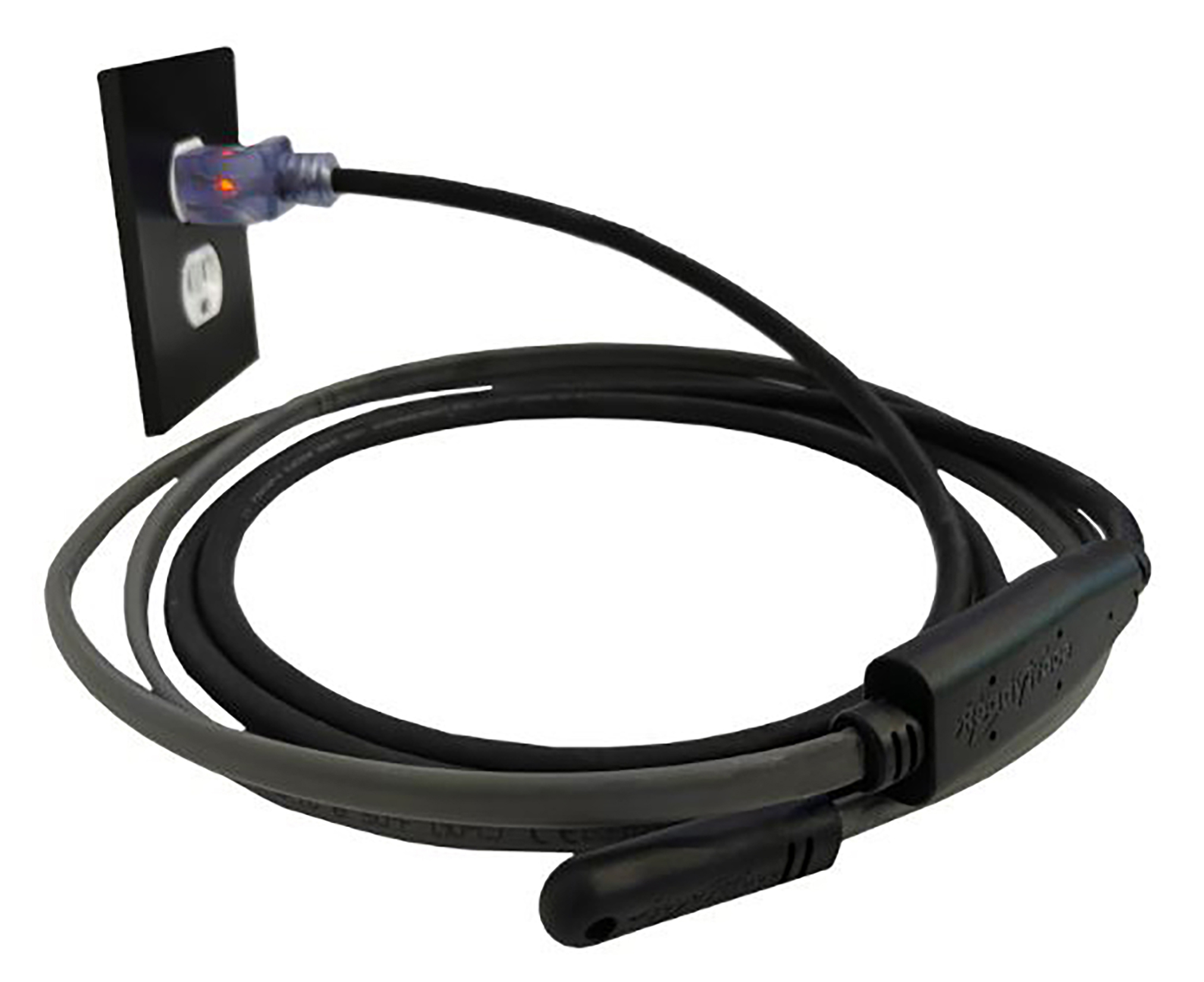
Keep Water Flowing Efficiently
View Ready Trace heat cables.Additional Factors Affecting Water Viscosity
While temperature dominates water viscosity changes, other factors matter in industrial applications:
- Dissolved substances: Adding sodium chloride or other salts increases viscosity slightly
- Pressure: Extremely high pressures can increase viscosity, though this effect is minimal in most industrial applications
- Suspended particles: Contaminants or additives change flow characteristics
- Flow conditions: Turbulent vs. laminar flow affects apparent viscosity
Your water quality directly impacts how accurately standard viscosity tables predict your system’s behavior. Regular testing ensures you’re working with accurate data for your specific conditions.
Understanding what the units of viscosity are helps you interpret measurements and communicate effectively with equipment suppliers.
Industrial Applications Where Water Viscosity Matters
Your operations likely involve multiple systems where water viscosity affects performance. Recognizing these applications helps you prioritize temperature control efforts.
Pumping Systems
Pump efficiency depends heavily on fluid flow characteristics. When viscosity increases in cold weather, your pumps face:
- Higher energy consumption
- Increased wear on impellers and seals
- Reduced flow rates at the same pressure
- Potential cavitation issues
- Greater risk of system freezing
Maintaining optimal water viscosity through temperature control protects your pumping equipment and reduces operational costs.
Heat Exchangers
Heat transfer efficiency in your heat exchangers depends on both thermal conductivity and viscosity. Higher viscosity reduces turbulence and heat transfer coefficients, meaning:
- Longer heating or cooling times
- Reduced overall system capacity
- Increased energy requirements
- Potential fouling issues
Your heat exchanger performance varies significantly with seasonal temperature changes unless you implement active temperature management.
Fluid Transport Networks
Piping systems experience dramatic changes in pressure drop when water viscosity varies. Cold weather increases viscosity, which means:
- Higher pumping costs to maintain flow rates
- Increased stress on pipe joints and fittings
- Greater risk of freezing in exposed sections
- Reduced system capacity
Container temperature control solutions maintain consistent viscosity in storage tanks and totes, ensuring reliable fluid properties when you need them.
Temperature Control Solutions for Viscosity Management
Maintaining optimal water viscosity requires proactive temperature management. Your industrial systems perform best when you prevent extreme temperature variations that affect fluid flow characteristics.
Heat Trace Systems for Consistent Viscosity
Custom Heat Trace Systems provide precise temperature control along pipes, tanks, and other fluid handling equipment. These systems prevent viscosity increases that compromise your operations by:
- Maintaining consistent temperatures throughout your fluid transport network
- Preventing freezing in exposed piping
- Reducing energy consumption compared to overheated systems
- Protecting equipment from thermal stress
Heat trace technology adapts to your specific viscosity requirements, whether you’re managing liquid water in processing applications or preventing freezing in outdoor installations.
Monitoring and Adjustment Strategies
Effective viscosity management requires ongoing monitoring and adjustment:
- Install temperature sensors at critical points in your system
- Track viscosity values through direct measurement or temperature-based calculations
- Adjust heating or cooling based on seasonal variations
- Document performance changes to optimize your control strategies
- Schedule preventive maintenance around temperature extremes
Your proactive approach to temperature control prevents costly downtime and equipment damage while optimizing energy efficiency.
Download our viscosity guide for comprehensive reference data and application-specific recommendations.
Frequently Asked Questions
What is the viscosity of water at 25°C?
At 25°C (77°F), water viscosity measures approximately 0.890 mPa·s for dynamic viscosity and 0.893 mm²/s for kinematic viscosity. This temperature represents a common reference point for industrial calculations because it’s close to standard room temperature. Your systems operating near this temperature experience relatively low viscosity and efficient fluid flow characteristics.
What is the SAE viscosity of water?
Water doesn’t have an official SAE (Society of Automotive Engineers) viscosity rating because SAE classifications apply specifically to motor oils. However, if you were to compare water’s viscosity to SAE ratings, it would fall well below SAE 5W, the thinnest motor oil classification.
The kinematic viscosity of water at room temperature is around 1 mm²/s, while SAE 5W oil measures approximately 3.8 mm²/s at 100°C. This comparison illustrates just how much lower water viscosity is compared to lubricating oils, which affects pumping requirements and system design in water-based applications versus oil-based systems.
Optimizing Your Systems for Variable Viscosity
Understanding water viscosity changes empowers you to design more efficient systems and troubleshoot performance issues effectively. Temperature remains the dominant factor affecting viscosity, and controlling it protects your equipment while optimizing energy consumption.
Your industrial operations face constant challenges from temperature variations. Whether you’re dealing with seasonal changes, process heating requirements, or cold weather protection, maintaining appropriate water viscosity keeps your systems running smoothly.
Consider these optimization strategies:
- Design systems with temperature control capabilities from the start
- Size pumps and heat exchangers account for viscosity variations
- Implement monitoring systems that alert you when the temperature goes beyond normal
- Schedule maintenance around periods of extreme viscosity changes
- Train operators to recognize viscosity-related performance issues
Industry publications like Chemical Engineering resources. Provide ongoing guidance for viscosity management in specific industrial sectors, helping you stay current with best practices and emerging technologies.
Take Control of Water Viscosity in Your Operations
Water viscosity management is essential for maintaining efficient, reliable industrial systems. Temperature control directly affects fluid flow, energy consumption, and equipment longevity across your operations.
By understanding how temperature affects viscosity values, you can predict system behavior, prevent problems before they occur, and optimize your processes for maximum efficiency. The relationship between temperature and viscosity follows predictable patterns that you can leverage for better operational control.
Don’t let cold weather stop your business. Powertrace heat trace cable will keep you running smoothly, no matter how low the temperatures drop. Explore Heat Trace Systems to discover solutions tailored to your viscosity management needs.
Your industrial systems deserve the protection and efficiency that proper temperature control provides. Take action today to optimize your water viscosity management and experience the benefits of consistent, reliable operations year-round.
Frequently Asked Questions
What is the viscosity of water at 25°C?
At 25°C, water has a dynamic viscosity of approximately 0.890 mPa·s and a kinematic viscosity of 0.893 mm²/s.
What is the viscosity of water at 20°C?
At 20°C, water has a dynamic viscosity of approximately 1.002 mPa·s and a kinematic viscosity of 1.004 mm²/s.
Does water viscosity increase or decrease with temperature?
Water viscosity decreases as temperature increases because warmer molecules move more freely and create less internal resistance to flow.
Why does water viscosity matter in industrial systems?
Water viscosity matters because colder, more viscous water can increase pump energy use, reduce flow rates, raise pressure drops, and create more stress on pipes, valves, and equipment.
Don't let the cold weather stop your business. Powertrace heat trace cable will keep you running smoothly no matter how low the temperatures.