

Field teams that maintain wind turbine blades need repair procedures and tools that deliver repeatable structural performance, minimize downtime, and protect annual energy production. This field guide walks through practical diagnostics, materials, cure control, and quality criteria for turbine blade repair, along with a field-ready curing solution, the CureMax 36″ × 48″ high temperature curing blanket. CureMax helps technicians meet OEM cure schedules in harsh environmental conditions and supports consistent wind turbine blade repair in the field.
Why wind turbine blade repair matters for operations, AEP, and structural integrity
Impact on annual energy production, efficiency, and longevity
Localized damage to wind turbine blades, such as leading edge erosion, cracks, delamination, and coating failure, reduces aerodynamic efficiency and lowers annual energy production. Timely wind turbine blade repair restores the surface profile and reduces parasitic loads on the drivetrain, which improves efficiency and protects expected service life across the fleet.
Extending expected service life by reducing erosion, cracks, and rework
Proactive wind turbine blade maintenance that addresses leading-edge erosion and small cracks early can extend expected service life. Quality composite blade repair and controlled cures reduce residual stresses and rework, improving long-term reliability for wind assets.
Cost-effective alternatives to replacement
Repair is often a cost-effective alternative to full blade replacement. Component-level wind blade repair preserves structural integrity and saves on transport, crane time, and replacement cost while minimizing downtime and preserving turbine operation. When done correctly, turbine blade repair can deliver a strong return on investment compared to full replacement.
Damage modes on wind turbine blades in harsh environmental conditions
Common damage modes include leading edge erosion from rain and particulate impact, cracks and delamination from impacts and fatigue, adhesive or bond failures at joins, lightning receptor damage, gelcoat degradation, and water ingress that saturates cores. Understanding these damage types helps teams prioritize wind repair and maintenance tasks that have the biggest impact on annual energy production.
 Inspection and diagnostics for wind blade repair

Begin with safe access and a site-specific method statement. Use visual inspection, tap tests, ultrasonic testing, thermography, and moisture detection to classify damage. Record findings in a repair packet with photos, NDT outputs, and a proposed repair scope that aligns with warranty window requirements. For more guidance on how heat fits into composite workflows, you can review Powerblanket resources on composite heating blankets and process control.
Repair versus replacement decision framework
Decide between repair and replacement based on damage location, size, structural involvement, cost, and downtime. Localized surface erosion and small delaminations are typically repairable. Spar cap or root damage often requires replacement. Quantify lost annual energy production for the expected downtime to determine the most cost-effective outcome and to decide where blade component repair makes the most sense.
Materials and tools for field composite repair
Select OEM-approved resins, structural adhesives, core materials, and fabrics. Use metered dispensers, calibrated mixing, and appropriate fillers and fairing compounds. Protective coatings and leading-edge protection systems are required after structural work to prevent future erosion. PPE, ventilation, and safe handling procedures are mandatory for all repair work, especially when technicians are working at height on turbine blade repair projects.
Curing requirements for reliable blade component repair
Follow manufacturer-based cure schedules that specify ramp, soak, and post-cure steps. Uniform heat is essential to avoid hot and cold spots that create voids and residual stresses. In cold or windy sites, deploy environmental enclosures and field-capable curing solutions with thermocouple-based data logging to support traceable quality assurance. For a deeper dive into curing methods, consult Powerblanket’s guidance on the best heating method for curing wind turbine blades and other composite structures.
Standard repair procedures for wind blade repair
Standard workflows for wind turbine blade repair include:
- Inspection and scope definition
- Surface preparation and scarfing to sound laminate
- Core replacement where required
- Layup or patch bonding with matched fibers
- Controlled cure with monitored temperature
- Finishing with fairing and protective coatings
For crack arrest, drill stop holes, inject structural resin, and then apply a laminate patch over the area. Always document repair procedures and cure records for acceptance. When the repair involves epoxy resins or advanced composites, it is helpful to align with Powerblanket resources on epoxy curing and composites solutions to validate that cure control and thermal profiles match OEM expectations.
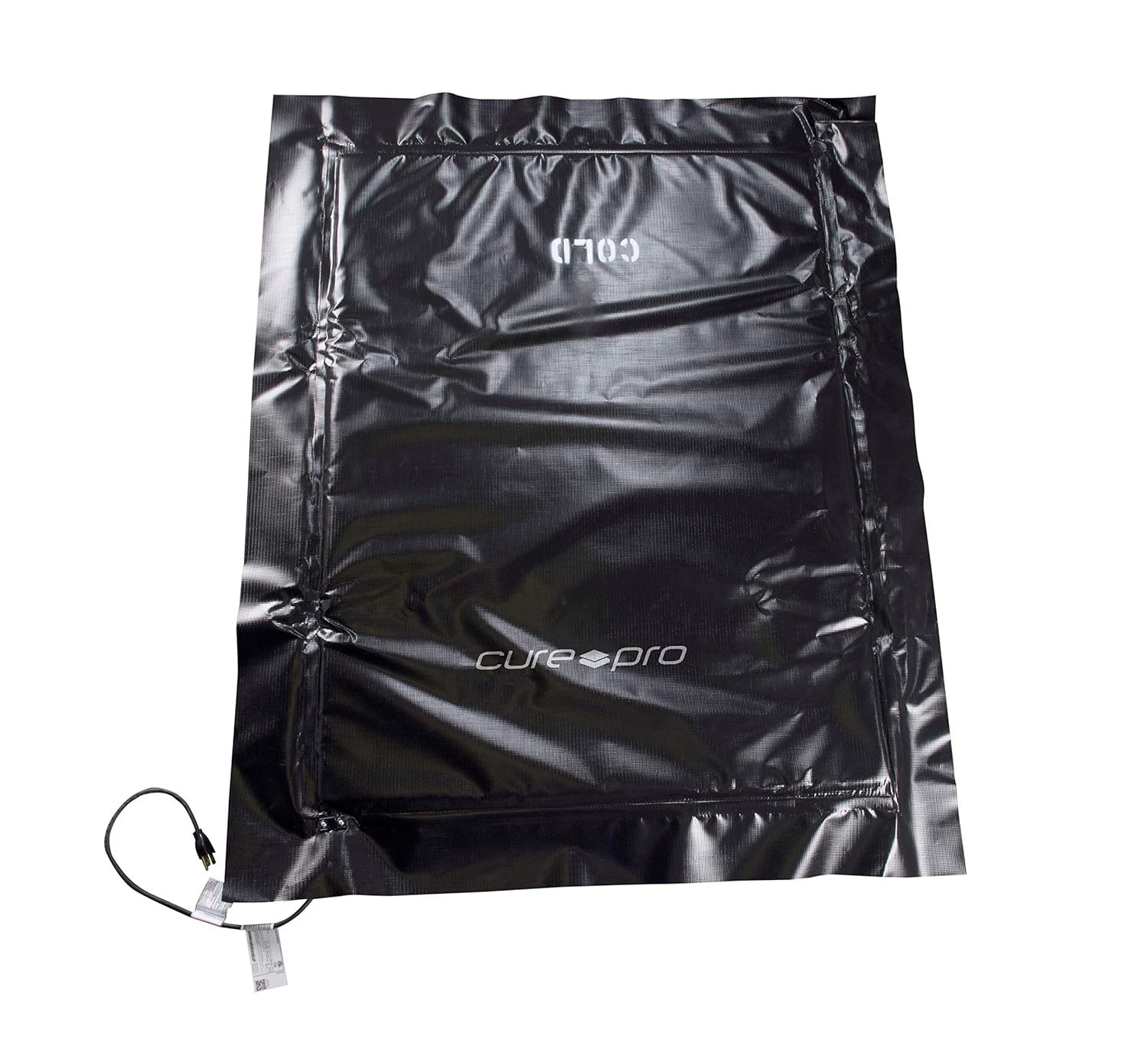
Portable, compliant heat with the CureMax 36″ × 48″ high temperature curing blanket
The CureMax 36″ × 48″ high temperature curing blanket delivers uniform, controlled heat up to 190°F (88°C), which enables technicians to meet many OEM cure schedules on site. UL and CSA certification support use in demanding industrial environments. CureMax is built with a silicone glass cloth exterior and a rugged vinyl shell to withstand harsh site conditions. Its footprint covers common patch sizes used in leading-edge erosion repairs and trailing-edge bond restorations.
Integrate CureMax with thermocouples and data loggers to create a traceable cure profile that supports warranty and quality acceptance. For nonstandard geometries or unique wind repair challenges, Powerblanket also offers custom curing blankets for unique blade repairs and complex composite structures.
Quality assurance and acceptance criteria
Use redundant thermocouples at the bondline and across the repair to verify ramp and soak. Log time and temperature data and retain records. Verify bond strength with pull-off tests or NDT methods such as ultrasonic testing or thermography, according to OEM thresholds. Define rework triggers for cure deviations, NDT anomalies, or adhesion shortfalls, and require re-inspection before returning the turbine to service.
Cost, downtime, and ROI for wind repair
Typical blade component repair costs range from low thousands for minor leading edge patches to tens of thousands for moderate structural repairs. Full blade replacement is substantially higher. Because downtime directly reduces annual energy production, shortening cure cycles with uniform heating solutions reduces lost revenue and can make turbine blade repair the clear economic choice over replacement.
Maintenance strategies to extend wind turbine blade lifespan
Adopt condition-based inspection intervals, cleaning protocols, and leading-edge protection upgrade paths. Prioritize wind turbine blade maintenance tasks that most affect annual energy production and structural integrity. Use SCADA and performance analytics to schedule maintenance during low production windows and batch repairs to reduce mobilization costs. These practices support consistent wind blade repair outcomes and predictable performance.
Training, expertise, and workforce development
Technicians should hold safety and access certifications, such as GWO and IRATA or SPRAT, where required, along with composite repair training and NDT skills. Employer-led on-the-job experience, OEM-endorsed courses, and equipment-specific training for tools like CureMax help ensure wind blade repair services deliver repeatable outcomes and protect warranty windows.
Field example of leading-edge erosion repair
In a documented field study, a leading-edge erosion zone was repaired using OEM-approved resin, core replacement, and a leading-edge protection system. The team used the CureMax 36″ × 48″ blanket with thermocouples to maintain uniform heat and reduce cure time by approximately 40 to 50 percent compared to ambient cures. NDT and adhesion sampling passed acceptance criteria, and the repair protected annual energy production without the cost or delay of blade replacement. This type of controlled wind turbine blade repair demonstrates the value of investing in cure control and high-quality blade repair equipment.
Frequently asked questions about wind turbine blade repair
Can wind turbine blades be repaired?
Yes. Wind turbine blade repair and component-level blade repair can restore aerodynamics and structural capacity when performed according to OEM procedures and validated with proper quality checks.
How much does repair cost versus replacement?
Repair generally costs a fraction of replacement when you factor in mobilization, crane time, and lost annual energy production. A structured decision framework helps identify the most economical wind turbine blade maintenance strategy for each damage scenario.
Do blades need regular cleaning?
Yes. Regular cleaning and inspection reduce leading-edge erosion, support long-term reliability, and help technicians spot early damage before it becomes a larger turbine blade repair scope.
What is required to become a blade repair technician?
Safety and access training, composite repair certification, and NDT competency are the core prerequisites, along with supervised field experience and equipment-specific training for tools like curing blankets and NDT instruments.
Procurement and implementation checklist
Effective wind turbine blade repair combines disciplined inspection, OEM-compatible materials, trained technicians, and uniform, traceable curing. By integrating these elements with compliant curing solutions like the CureMax 36″ × 48″ high temperature curing blanket and custom curing blankets for unique blade repairs, blade repair services can reduce downtime, lower cost, and extend the life and reliability of blades across a fleet. These practices protect annual energy production and structural integrity while delivering cost-effective wind repair and maintenance outcomes.
Frequently Asked Questions
Can wind turbine blades be repaired?
Yes, wind turbine blades can be repaired using OEM-approved materials and techniques to restore aerodynamics and structural integrity, ensuring minimal downtime and cost-effectiveness compared to replacement.
What happened to the two engineers on the wind turbine?
While this question doesn't directly relate to blade repair, it highlights the importance of safety protocols and training for technicians working on wind turbines to prevent tragic accidents.
How much do wind turbine blade haulers make?
The salary for wind turbine blade haulers varies by location and experience, but it generally reflects the specialized skills required for transporting large components safely and efficiently.
Accelerate your projects with the unmatched efficiency and precision of Powerblanket’s CureMax high-temperature curing blankets—engineered to deliver consistent, reliable heat up to 190°F for flawless results in any condition.